SEARCH SITE
SPONSORS
FEATURED


TWEET

MEMBERS
Sunday
Jul252010

Matterhorn for Magic Kingdom Fantasyland


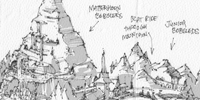
Concept for an East Coast Matterhorn! Newly-created concept art created by Imagineering Disney.com

I was talking with my pal Hoot the other day about how a Matterhorn mountain would fit perfectly in Magic Kingdom's Fantasyland.  Disney talked about the idea decades ago.  It was intended to go where Toontown is today.  The latest rumors about the 'new Fantasyland' or 'Fantasyland Forest' say that some people at Disney are rethinking the whole thing- minus The Little Mermaid ride and the Be Our Guest Beauty and the Beast restaurant.  

I Say Give Us a Matterhorn!  
Wouldn't that make everyone happy??  The thrill-seekers and the nostalgic-minded alike?  The 20K (or former 20k) property is ginomous.  It can fit a mountain, a few dark rides, and a whole lot more.  Hoot says he wants a Pinocchio dark ride and I agree.

A Boat Ride and Swiss Village
In the concept above (drawn on a napkin this afternoon) you'll see the old classic Matterhorn taken to a new level.  Not only is there the Matterhorn mountain much like you see at Disneyland, there is a boat ride going through the lower caves of the mountain and through a Swiss Village.  The Swiss Village would include a full-service restaurant with the boat ride through the middle.  There will be a quick-service restaurant and a bakery full of swiss cheeses and pastries (at the request of my wife).

Two Tracks?
Also unique to this design--- Not only is there a regular bobsled track through the mountain, the concept includes 'Junior Bobsleds' for the little ones.  I ran this idea past Lilly and she said to make the tracks begin and end at the same time.  That way younger riders and older riders can can load and unload together, both experiencing the 'same' attraction at the same time.  This way the little riders get to ride the Matterhorn AND have a more thrilling ride to look forward to when they are older.  The junior track would go through lower caves of the mountain but mostly traveling through smaller hills outside the mountain.

I say the bobsleds on both tracks should not only depart next to each other but they parallel each other for the first little while before going their own separate ways.  THEN they meet up next to each other at a couple points along the way THEN end at the same unload dock.  Now you can ride the same attraction three ways:  regular, junior, and by boat.


Thursday
Jul222010

A Look at the Progress City Model- Then and Now

The Progress City model was once a spectacular site.  Housed on the second level of the Carousel Theater at DIsneyland above The Carousel of Progress, it was often visited but not-so-often photographed or filmed.  It was a large model with many moving parts and electric lights.

What you see today while riding the Magic Kingdom’s TTA  is only a piece of the original model.  Not only did a relatively small section of the model survive, a very small amount of movement and lighting remains today.  There are fewer houses, far fewer cars and the landscaping is almost nonexistent compared to the original.  The thing was literally sliced up in various places to fit it’s new space at Walt Disney World.

The blue lines below indicate the area of the model you see today.


A Chance to Restore the Model

A few years back I was asked if I’d like to help restore this old model city.  I wet my pants a little and said, “Sign me up!  I’ll come in early and stay late if I have to, just don’t change your mind”.  Life stinks sometimes, especially in the moments that excite you the most.  The lousy bums changed their minds.

- “It’s a matter of ownership.  We don’t actually know who ‘owns‘ the model”.

Yeah well I’d been up there a few times before to climb around and my old model train city I made as a kid with my mom’s hot glue gun and little hobby shop fake trees was in better shape.

The model as seen within the last several years. Viewed from catwalk above the TTA track.

- “WHAT DO YOU MEAN WE CAN’T RESTORE IT NOW??”

- “Well we think it belongs to Decorating and they ain’t interested in doin’ notin’  wid it.”

- “ARE YOU KIDDING ME?  Give me their number.  You are saying that even if I volunteer my time to save this piece of history, you ain’t gonna let me because no one wants to deal with the thing??  IT’S OLDER THAN ALL OF DISNEY WORLD!”

- “Yeah well, we isn’t interested in the best interest of stuff around here.  Go finish yurr work on that Small World doll.”

Good thing I like working on Small World dolls.   As it turns out, ‘Decorating’ had already been there.  No need to clean the model or fix the broken buildings.  Definitely no need to fix the double ferris wheel that once moved round and around.  Nope.  All they needed was a few out-of-scale Matchbox cars and sci-fi toys to spread around.  Now that brings me to something that not everyone seems to quite understand.  Imagineering doesn’t maintain everything you see at the parks.  Hardly. There are loads of other departments who focus (or don’t focus) on various pieces of the attractions and parks in general (Engineering Services, Decorating, Artist Prep, Creative Costuming, Buildings, Custodial, even Buena Vista Construction Company, etc.).


The Fantasy of EPCOT Living 

I’d always loved the WEDWay PeopleMover at Magic Kingdom (now TTA) in large part due to the view of Progress City.  I liked to dream of the life I could have had in the low-density residential outer rings of the city of EPCOT.


Concept art for Medallion City, 64-65 New York World Fair, meant to showcase residential life in Progress City

While riding past the model I’d spot nifty looking mid-century modern ranch-style houses with PeopleMover stations out the back door with views of the towering cosmopolitan hotel and convention center.  A little amusement area and schools for the kids, pedestrian walkways separate from the motor ways, a Monorail traveling through the center of town... Hot dog, what could be better?

The wife and I could meet up for ethnic food while she shops in the retail district just below my office building.  Once inside, weather conditions good and bad would be safely out of reach, yet visible though the domed glass skylights.  Walt Disney would be walking around pointing at stuff and I’d say ‘hi’ to him.  Marty Sklar would be telling people that a city like the one he’s standing would be too expensive to ever build.  Herb Ryman would be at the next table sketching on a napkin.  Then he’d give me his sketches and we’d discuss the look of transportation systems of the future.  My wife would love that.


Why the Tiki Lounge in the City of the Future?

Tiki building as seen in the model's original state

The same tiki building on current model

Doesn’t seam to fit in, or does it?  Remember, the peak of America’s fascination with all things ‘tiki’ was the 1950s and 60s.  The phenomenon began with returning WWII soldiers who had served time in the Pacific.  Hawaii had not been opened to tourist travel by jet plane for all that long.  The war ended in the mid 40s and i presume many of the W.E.D. staff had spent time in Polynesia.  And remember that Progress City focussed on all areas of life, including leisure.  What better way to relax than in some tike restaurant on the marina?  Maybe someone just liked tiki stuff and added it to the plans??  Either way, this piece is still on the model and boy is it cool to think about.


A Hacked Model

You can compare the model in its two locations and the pieces that still stand today.  You’ll notice the little PeopleMover tracks no longer have moving PeopleMover cars on them.  The tracks were hacked, therefore no longer operational.  They appear to have been made of simple slot car technology.  Just like the slot car tracks you had as a kid, except without sharp corners that made cars fly off and break things in your living room.

Let's give give credit where credit's due.  Though the model is in a very dilapidated state after all these years, it's presented in a way that makes it look pretty good.  Granted I'd love to see moving parts and fewer broken pieces, but from a moving WEDWay car, in a dark tunnel, behing glass- the thing doesn't look half bad.  

Some of these photos were taken without show lighting and with the use of flash.  Some are with show lighting, no flash.


I'd Give My Right Eye

I’ve been looking for video or imagery of the 6th portion of Disneyland’s Carousel of Progress forever now.  After the final act of the show, guests would exit though the stage area and ascend to the second floor to see the Progress City model.  I’ve found very little.  I would love to see exactly what that experience was, including the viewing area of the model.  

So PLEASE send anything you have showing these things.


Photos by Fritz and Hoot.  A special thanks to Hoot who has done a heap of research and investigation involving the model.  He was the one who showed me the secret door to get to the model and the catwalk above.  You’ve seen the door before.  You just don’t know it! 


[ MANY MORE DETAILED PHOTOS TO BE POSTED SOON.  PLEASE CHECK BACK LATER. ]


Saturday
Jul172010

Disneyland in 1955


A quick look at the early days of Disneyland. Opened to invited guests 55 years ago today on a Sunday morning, and to the general public 55 years ago tomorrow.


.


Front and back covers of "Picture Souvenir Book of Disneyland in Natural Color" reprinted in 2005 for Disneland's 50th Anniversary.


Scan from the inside front cover of "Picture Souvenir Book of Disneyland in Natural Color"


A list of attractions was presented in this early map from an early Picture Souvenir Book. This specific book was not available on Opening Day, of course, because photos with guest in them were not available. This an interesting map-- oddly drawn and missing a number of attractions from 1955. You'll notice the lack of labels for Mr. Toad's Wild Ride, Snow White, Peter Pan, Mad Tea Party, and almost everything in Tomorrowland. I love that the Railroad is traveling the wrong direction. Holidayland is on the complete opposite side of the park. It's cool to see the waters of Rivers of America connected to the waters of " 'Explorer Boat Ride' through the Rivers of Mexico, Africa, Central and South America, and Australia" (The Jungle Cruise).


Main Street, USA

No other part of Disneyland resembles the way things looked in 1955 more than the exterior portions of Main Street. Almost every sign has been changes but the architecture of the buildings remains almost identical. The interiors however have changed much.


Fantasyland

Within the Castle Courtyard King Arthur Carrousel was positioned much closer to Sleeping Beauty Castle than it is today. The Mad Tea Party was directly north of the carrousel (both moved to new locations along with Dumbo in 1983). Sleeping Beauty Castle was spectacular yet the public had little connection with the animated film because Sleeping Beauty would not debut until January of 1959. Artwork was presented on Disneyland, the T.V. show in 1954 and the Sleeping Beauty walk through attraction inside the castle opened in 1957 with several dioramas telling the story of Sleeping Beauty. A similar walk through attraction exists today.


Casey Jr. Circus Train, one of my favorite little attractions still today, offered a view of the very underdeveloped Canal Boats of the World (later renamed Storybook Land Canal Boats). The boats were sadly not operational on Opening Day. The landscaping and miniature scenes we know today were not present but plenty of dirt was.

A creepy looking Court Jester selling balloons?

You'll notice what looks like another Court Jester running with kids on Opening Day through the castle in this famous photo. When did they finally get rid of those guys?? I guess they fit the land in which they reside, but still...

Tomorrowland

The most changed of any land. The Autopia is the only remaining attraction today. In 1955 guests enjoyed the following, now extinct, attractions. Circarama U.S.A., "A Tour of the West, the Dutch Boy Paint Color Gallery, Monsanto Hall of Chemistry, Kaiser's Hall of Aluminum Fame, Rocket to the Moon, Space Station X-1, Thimble Drome Flight Circle (displaying flying model planes), Tomorrowland Boats, 20,000 Leagues Under the Sea exhibit, and The World Beneath Us presented by Richfield Oil.

No guide rail on the Autopia track?? Boy did I dream of that as small child. Among the first to ride the Autopia on Opening Day were Frank Sinatra and son and Sammy Davis Jr.


Adventureland

Hop aboard the "Explorer Boat Ride through the Rivers of Mexico, Africa, Central and South America, and Australia" (Jungle Cruise) where the skipper was not wise-cracking, the plants were small, and the Marc Davis gags we know and love today did not exist. However Schweitzer Falls waterfall was called Schweitzer Falls even way back then.

Frontierland

Other than the exteriors of Main Street and Sleeping Beauty Castle, the southern stretch of Frontierland facades have changed less than almost anything in the park.

Opening Day Model

It's worth taking a look at this top-notch model that was installed in the lobby of Disneyland's Opera House in Town Square for the 50th Anniversary. It was originally installed flat then later relocated within the same lobby to a northwest wall and was mounted on an angle. This location, as you might remember, once housed the talking animatronic owl who spoke about Walt Disney's True Life Adventures. Oh how I loved watching him narrate those clips in his little graduation cap in an old-fashioned classroom setting.

Hooray for Disneyland.

Images scanned by Mitch. All other photos taken by Mitch.


Monday
Jul122010

Out With The Walt, In With The New

A reader of the blog, Michael Linton, sent us this article he wrote in late 2001 for The Weekly Standard.  He has seen first-hand the changes Disneyland has experienced ever since he visited Disneyland the first month it opened, 55 years ago.

Keep in mind, this article was written the year California Adventure opened.  Remember when everyone was excited for a second park then we all said, "Seriously?  Umm, I think I'll stick with the best theme park ever made right over there."?  Well it was not too long before this when people started to notice a decline in cleanliness, maintenance, innovation, etc. at all Disney parks.  Not many years before this people were fond of Eisner and the work he was doing.  What happened?  After reading the following article we invite you to revisit an article by Lilly, Why the Decline in Park Maintenance? for more thoughts on the subject.


The Decline and Fall of Disneyland
From Walt Disney's America to Michael Eisner's.

by Michael Linton


AT THE BASE of the flagpole that marks the beginning of Disneyland's Main Street in Anaheim, California, rests an unobtrusive plaque. It reads: 

"Disneyland is your land. Here age relives fond memories of the past and here youth may savor the challenge and promise of the future. Disneyland is dedicated to the ideals and the dreams and the hard facts that have created America with the hope that it will be a source of joy and inspiration to all the world. July 17, 1955."

These are the words with which Walt Disney opened his remarkable experiment in entertainment almost half a century ago. Today it's more than a bit dizzying to turn around and trudge back across the ticket plaza to the new resort Michael Eisner has built in what was the old Disneyland's parking lot. Walt's Magic Kingdom now shares the block with Eisner's California Adventure, and the distance between the two is much further than the seventy yards between them would suggest.

Like Disneyland, Eisner's park is divided into theme areas. Furthest from the entrance, and dominating the park's skyline, is "Paradise Pier." There's a roller coaster called "California Screamin'," a Ferris wheel, a boardwalk, and some carnival thrill rides. A raft ride, marking the middle of the "Golden State" section, gets you wet cascading down the slopes of a Sierra Nevada peak reminiscent of the grizzly bear on the California state flag. There's a mini-section with a big-screen flight simulator that wings you over bits of California scenery (the innovation here is aromatic: Over forests and orchards we get bits of appropriate orange or pine scent). "Pacific Wharf" is a food court complete with a microbrewery and patio for wine tasting. The "Hollywood Pictures Backlot" is a street of 1930s-style false fronts with theaters for stage shows and films and more places to get hot dogs. Abutting the park on the west is the new Grand Californian Hotel and a half-mile shopping mall called "Downtown Disney."

The expanded Disney empire in Anaheim has been long in coming. Ever since the opening of Disneyland in the 1950s, Walt and Roy Disney resented the dozens of hotels--of various grades of cheesiness--that grew on the park's perimeter, and they resolved not to repeat their mistake of buying too little land when Disney World was planned in Orlando. Meanwhile, back in California, the Disney brothers negotiated with the city of Long Beach for an Epcot-like park on the city's waterfront (where they already owned the Queen Mary and the Spruce Goose), but nothing materialized.

Now, under Eisner, the company has joined with the city of Anaheim to develop 1,100 acres around Disneyland. Disney bought out the businesses that bordered the park to the west, expanded its hotels, built the "California Adventure," and put up huge parking garages--all at a price tag of $1.4 billion. And the expansion isn't over: The Anaheim city council approved in concept a third theme park for Disney last July. It's not just Disneyland anymore. It's now the "Disneyland Resort."

FUNNY. As kids growing up in southern California we never thought of Disneyland as a resort. Baden-Baden and Palm Springs were resorts. But Disneyland was a kingdom. It was, in fact, a kingdom celebrating American optimism. It's easy to read those words Walt Disney spoke at the park's dedication as so much blather. Disneyland was and always has been a business. Walt--and especially his older brother Roy--were wizards at marketing. And when looking at Dumbo it's hard to know just what Disney meant by "hard facts."

But Disneyland became such a part of American culture because it celebrated--more eloquently than any other institution of the postwar period--the notion of the American Dream. It wasn't as much an amusement park as a morality tale. Remarkably, when it opened there were no thrill rides at all (the Matterhorn bobsleds weren't added until the 1960s).

Instead there were attractions about Snow White and Mr. Toad and Peter Pan, in each of which the visitor experienced the story through narrative, architecture, music, and technology. The stories always taught something--like the lesson that outward beauty or ugliness could be deceiving (as with the stepmother and the dwarves in "Snow White"). And good always triumphed.

The morality tale extended to American history. On the paddle wheeler Mark Twain the visitor was floated past frontier woodlands. A mine train took visitors through the arid southwest. Main Street was an idealization of Teddy Roosevelt's America, a thoroughly midwestern nation that had plowed the prairies and defeated slavery and was now busy preaching its gospel of can-do optimism from Puerto Rico to the Philippines. In Tomorrowland that gospel reached its millennium. There was the "house of the future" (made almost entirely of plastic), and freeways where kids could drive without traffic jams, and rockets to fly to the moon. The past was something Americans could be proud of--and the future was bound to be even better.

Disney basically continued his original vision with the park's additions. The Matterhorn, inspired by the company's movie on the heroic mountaineers who first climbed the Swiss peak, housed the park's first roller coaster. Tomorrowland was updated along polished steel lines, to include a futuristic monorail and "people mover," both seen as models for urban development. But the most important additions--the capstones to Walt's Anaheim venture--were exhibits originally shown at the New York World's Fair: "Primeval World," "It's a Small World," the "General Electric Carousel of Progress," and "Great Moments with Mr. Lincoln."

All of these attractions made spectacular use of Disney's innovative "animatronics," paving the way for what was to be the park's most popular attraction: "Pirates of the Caribbean," which opened only months after Walt's death in December 1966. Abutted to the original park's Grand Canyon diorama, "Primal World" presented a land of dinosaurs based upon episodes of "Fantasia." The "Carousel of Progress" told the story of the growth of American prosperity in four vignettes. "It's a Small World" celebrated how nice kids were (and featured the catchiest and most annoying tune Disney ever produced). Finally there was Mr. Lincoln holding forth from the Main Street Opera House.

And Disneyland was beautiful. The paint was always fresh, the walks and streets spotless. Disney banned alcohol, in part because it contributed to public disorder but also because he thought it symbolically served to divide parents from their children, and Disneyland was about the unity between generations. Families with children, grandparents, teens out on dates, and even newlyweds all felt at home in Disneyland. And despite the cost (Disneyland was always pricy), I don't think that I ever remember anyone really resenting the expense.

OF COURSE it was corny. And much of it untrue. The idyllic main streets that sponsored fraternal orders like the Knights of Pythias also hosted the Ku Klux Klan. Despite the tune, it's not a small world but one characterized by cultures deeply antagonistic to each other. The fairy tales Disney popularized were much grittier and more ambiguous than their Disney versions. Floating through Disneyland's jungle ride in 1969 it was impossible not to think of booby-traps and Viet Cong. And Walt was himself not the harmless uncle his Burbank PR staff portrayed him as, but a visionary autocrat who was known to drive his staff as hard as himself.

Nonetheless, much of what Disneyland stood for was true. Life really is a struggle between good and evil. There are people who actually are heroes. There is no danger to the nation more to be feared than that brought upon it by the corruption of its own people. And this is a deeply beautiful land in which life could be rewarding and fun, and for which we should be thankful.

Eisner's California Adventure shares none of these qualities. Most of the attractions are amusing but pointless ("Soaring over California" presents a few minutes of splendid views, but without any narrative, the film might as well have been shot over Morocco). The thrill rides are no better than what's found at two dozen other amusement parks across the country, lacking innovation and imagination. And the park isn't even pretty. The replica of the Golden Gate Bridge that marks the new park's entrance is cramped. The food court is housed in a complex that looks like a decrepit Cannery Row. Disney even seems to have lost its way with lights. At night the illuminated Paradise Pier isn't as pretty as Long Beach's now demolished Pike was forty years ago. It's even dirty. Trash floats in the lagoons. Litter lies uncollected on the walkways. And it's overpriced. At an adult admission fee of $43--the same as for admission to Disneyland--we feel less like guests than rubes.

Or like members of a market niche. It's not quite true that California Adventure tells nobody's story. It--together with the entertainment-merchandising-information behemoth Disney has become--tells the story of a culture obsessed with getting richer through ever-greater market-share and niche exploitation. By far the most physically attractive part of Eisner's addition is "Downtown Disney," a pedestrian street offering tens of thousands of square feet for hawking Donald Duck key chains, Snow White costumes, and Mickey Mouse T-shirts. Eisner hasn't put a plaque here yet, but I know what it will read: "It's the economy, stupid."

December 5, 2001, would be Walt Disney's one-hundredth birthday, and the company he founded has marked the centenary by spectacularly repudiating one of his greatest gifts to the country. It's enough to make Mickey weep.


Saturday
Jul032010

America Sings

[ UPDATED 7-6 with new images and info ]

A look back at the Marc Davis / Al Bertino patriotic animatronic wonder and how some of it's pieces live on today.

Think of Carousel of Progress meets Country Bear Jamboree meets American Adventure.  It was hosted by an eagle named Sam, voiced by the great Burl Ives, and co-hosted by Ollie Owl.  Shows ran from 1974-1988 in Tomorrowland's Carousel Theater, Disneyland.  It replaced The Carousel of Progress which was moved to The Magic Kingdom in 1975.  The empty round building with it's rotating outer ring of seating and stationary set of inner stages was a perfect fit for such an idea.  Though I've always thought the Tomorrowland setting was not entirely fitting, America Sings was a really swell! 


After closing in 1988, a number of America Sings' audio animatronics were repurposed in the 1989 E-Ticket log flume adventure, Splash Mountain- Sam and Ollie, were not included in the move.  Splash Mountain's Song of the South premise with Brer Rabbit, Brer Fox, Brer Bear, and friends was an inviting setting for these friendly Marc Davis critters.  Costumes, props, and character poses were changed to fit the new storyline.

Below you'll find side-by-side comparisons of these critters in both setting.  Also included are some Marc Davis concept drawings for America Sings.  Photos of sculpted maquettes- on display at Disneyland's Opera House (still there today)- are also presented.  Additional photos are from Magic Kingdom's Splash Mountain.  

In October of 1992 the second and third Splash Mountains opened one day apart.  Tokyo Disneyland opened theirs on October 1 while Magic Kingdom opened their Splash Mountain on October 2.  To my knowledge, these rides did not receive any America Sings original animatronic figures, though they were both populated with many reproductions.


Foxes and Hens

In Act I - Early South -  foxes, hens and frogs sung Lay Down My Burden in gospel choir fashion.  The foxes and hens now can be seen aboard Disneyland's Splash Mountain's riverboat scene singing Zippity Do Da (without Uncle Remus... thanks to Michael Eisner, that rascal).

Also aboard the Zip-A-Dee Lady riverboat are two musical pigs, a hound guitar-playing dog, and a goose playing the part of river captain up top, and 3 female geese- all from America Sings.  The can-can geese came from Act III of America Sings, featured further below.

Magic Kingdom's Splash Mountain was given a mere 12 characters aboard their riverboat compared the 17 aboard Disneyland's.  No foxes and no hound dog.  In fact, no foxes other than Brer Fox exist in Magic Kingdom's version of the ride.  I imagine the happy foxes could easily be confused with the mischievous Brer Fox set out to kill and eat the attractions main character, Brer Rabbit.


The Swamp Boys

The Swamp Boys were made up of the gator trio, a harmonica-playing raccoon (above lower left), and singing frogs.  In Splash Mountain they were divided up, minus the gator trio which stayed together (above lower right).  Notice in the first video posted above the harmonica-playing raccoon is not part of the trio.  Must have been in maintenance that week (or year).  You'll see further down in the post where the raccoon ended up in Splash.

I love comparing the two Marc Davis concepts (above upper left and upper center).  It appears the raccoon was originally supposed to be a harmonica-playing possum.  Are raccoons cuter than possums?  Maybe he wanted variety, considering the fact that a mother possum with her babies was to sing right after the Swamp Boys. The second rendering includes the raccoon and the frogs as part of the Swamp Boys.  This time the gators get clothing.

 
The Swamp Boys frogs (above upper right) appear twice in the Early South act.  They sing Polly Wolly Doodle with the other Swamp Boys and they appear again at the end of the act along with the foxes and hens to sing Lay Down My Burden.  You can see where they are today (above lower left).  The closeup photo of the frog (above lower right) is a replica found in Magic Kingdom's Splash Mountain.  Notice the white eyes, lack of spots, and the different style hat.


The Boothill Boys

Before ever looking down on human passers-by with their evil grins as the humans approach Splash Mountain's largest drop, the vulture duo appeared in Act II of America Sings (above lower left and center).  For some reason the Boothill Boys didn't keep their top hats or clothing in California (above upper right) but their counterparts in Florida (above lower right) do wear clothes and have hats.  Why?  Not sure because tuxedos and top hats don't exactly fit the story.


Mule, Jitterbug-era College Students

In America Sings a mule ridden by Sam and Ollie in Act I - Early South.  Another mule carries the hound dog in Act II - Old West.  One of the mules (below right) can be seen in Splash Mountain "pulling" a wooden cart with America Sings' Jitterbug-era College Students, two female cats, a male wolf, and a male fox.  This time they wear country attire.


Saddlesore Swanson, the Turkey

Saddlesore Swanson sings The Old Chisholm Trail in Act II - Old West (above center).  For his Splash Mountain debut (above right) Saddlesore loses the spurs, gets a new hat and trades in his country guitar for one made out of a turtle shell and tree branch.  He keeps a red handkerchief around his neck, but one with a printed pattern this time. 


The Rabbit

During the I've Been Working on the Railroad number in Act II, a rabbit and a fox riding on a rail cart (above left) travel across the stage from left to right and back again.  Is this Brer Rabbit??  Marc Davis was directing animator on the 1946 part-animated, part-live action film, Song of the South.  The rabbit is not supposed to be Brer Rabbit, nor is the fox supposed to be Brer Fox.  Of course not.  But I imagine they were influenced by the Song of the South characters Davis worked with decades earlier.  Today you can see the America Sings rabbit playing the part of Brer Rabbit in Splash Mountain riding the same rail cart (above right).  This time he's wearing pants.


Geese 

I always loved the animation of the geese.  The facial expressions and the movement in their long necks.

Geese created for Magic Kingdom are given roles as fishermen (above left, center).  One has caught a boot.  The boot is no longer a real boot but one made of light-weight 'WonderFlex' to lessen the burden on the pole and goose figure.  One goose has caught the hat of another goose.  For more than a decade the hat was directly connected to the fishing line without a hook.  Finally at one point a hook was added. Hooray for details. One goose perpetually tries to catch the same jumping fish with a broken net.... that is if the jumping fish mechanism is properly functioning.  

A couple years before closing, America Sings donated the animatronic skeleton of a singing goose (above right) for the queue of Star Tours.  A binocular/Johnny5-like head was added with some other parts and some paint.  Compare the feet of the geese to the feel of the droid.  The droid definitely kept his webbed bird feet.  Of course a new voice was given.  He sings I've Been Working on the Same Droid, his own version of I've Been Working on the Railroad.  From what I know, Disney-MGM Studios in Florida was also given a goose for their Star Tours queue in 1989.


Storks and Can-can Geese

In Act III - Gay Nineties (above left) 4 female can-can geese take stage as another female goose sits in a bird cage above.  Two male storks with out-stretched wings rode old-fashioned bicycles.  The can-can geese still dance today aboard the Zip-A-Dee Lady riverboat mentioned earlier.  The goose from the cage is now on a large mushroom, under a larger mushroom (above lower right) in Splash Mountain today.  The male storks now dance in Splash (above upper right)